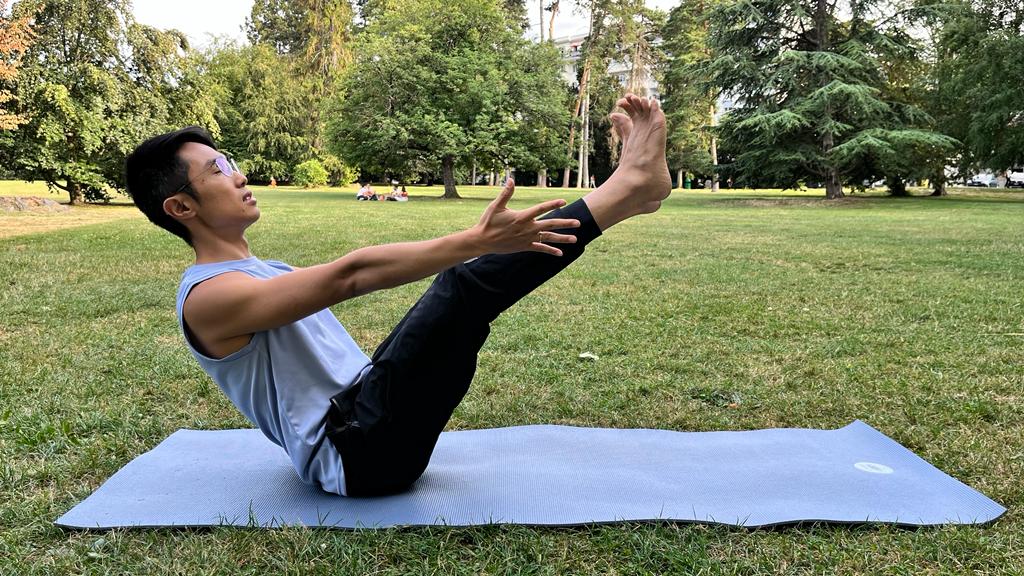
Boat pose. Just the thought of it makes me cringe. Yoga teachers seem to love putting their students through the heat, making us hold boat pose, testing our endurance. My hip flexors, the muscles where my thighs meet my hips, burn like fire, and I can’t help but feel uncomfortable. And let’s not even mention the challenge of balance in boat pose. Lose focus for a moment, and you find yourself struggling to get back into position. It can be a pain in the yogi’s butt, but amidst the discomfort lies a valuable lesson for those willing to explore it.
At the start of most classes, yoga teachers often encourage students to embrace discomfort while knowing their limits and avoiding pain. However, this instruction may not always be intuitive for everyone. In a world saturated with comfort and distractions, it’s easy to seek instant relief from discomfort through junk food, video games, or endless Netflix binges. Some students approach yoga as if it were a competitive sport, pushing themselves forcefully into poses, disregarding proper technique and flexibility. Neither extreme truly understands the transformative power that discomfort holds because they haven’t found the balance between mind, body, and breath.
Discomfort, especially in its physical form, can ground us and serve as a starting point for our meditation practice. For beginners, sitting in silence can already feel overwhelming, which is why many start with their backs against the wall. The additional discomfort of maintaining a straight back can distract the mind and become all-consuming. On the other hand, lying on the back might bring too much comfort and even lull us to sleep. Striking the right balance of discomfort is crucial for cultivating mindfulness. It awakens our senses, creating a space where we can observe the protests and sensations within our bodies without judgment.
As we progress, we gradually move away from the wall, onto the yoga mat, and eventually into our daily lives. It’s a process of examining our relationship with discomfort and understanding that true bliss and clarity emerge when we commit to this journey. By embracing the discomfort and allowing it to guide us, we discover the beauty of meditation and its transformative effects.
So, the next time boat pose rolls around in your yoga class, remember that there’s more to it than just physical strain. It’s an opportunity to explore your relationship with discomfort, find your balance, and unlock the profound rewards that lie on the other side.
 Zheng Yoga Geneva